Blossom Word Search
- 4.9
- Rating
- 100.00K
- Installs
- Free
- Price

 Analysis by App-foxy
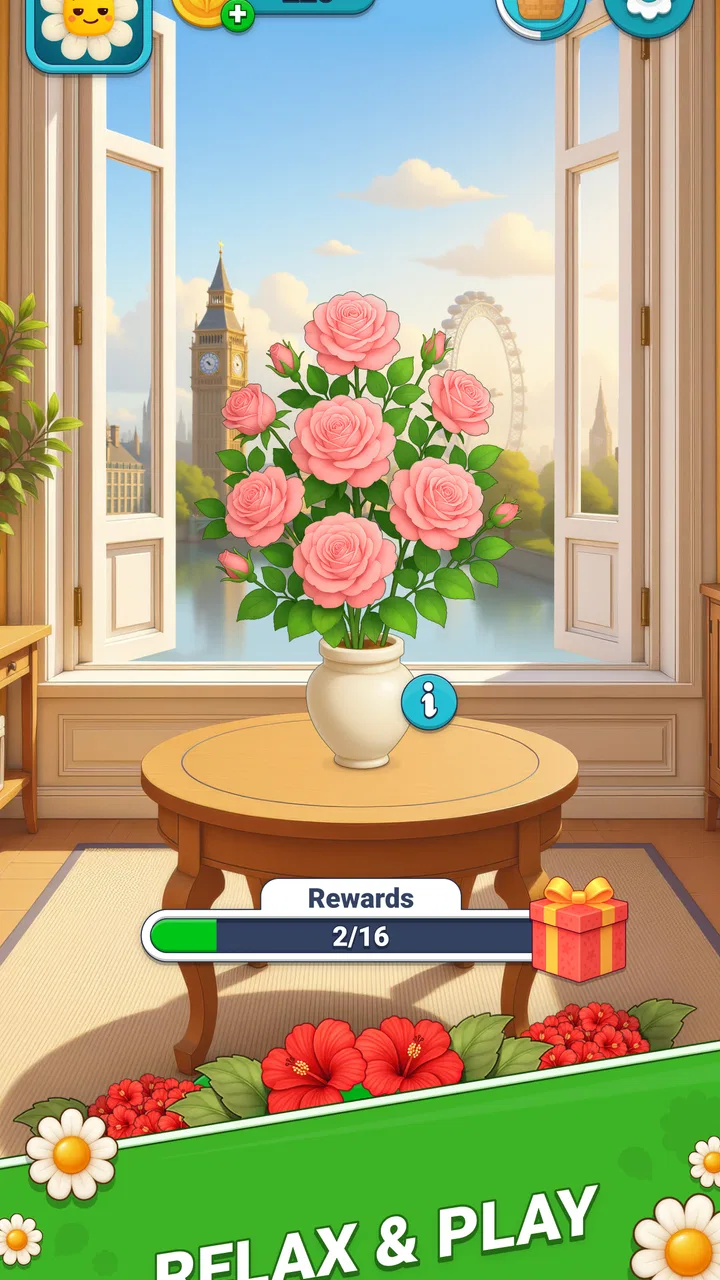
I approached Blossom Word Search as a quiet word game rather than a high-pressure challenge, and that distinction matters. It is built for people who enjoy finding words at their own pace, with a floral presentation that gives the experience a softer mood than the usual stark grid of letters. After spending time with it, I found the appeal is less about chasing a score and more about settling into a short, focused puzzle session.
That makes it easy to imagine using during a coffee break, while waiting for an appointment, or at the end of the day when I want something interactive but not demanding. It is a free game from Vento Games, rated for Everyone, and its word-puzzle format is immediately approachable. The important question is whether that calm style offers enough depth for regular play, especially when compared with more competitive word games or traditional puzzle books.
A gentle take on the familiar word-search format
The central idea is recognizable: scan a field of letters and discover words hidden within it. What gives this particular game its identity is the combination of that familiar activity with a floral theme. The presentation suggests progress through a peaceful garden-like atmosphere rather than a race against an opponent, and that changes how I read each puzzle. I am not entering a match expecting to outthink another player; I am looking for a few minutes of concentration without much mental noise.
You May Also Like

 Blood Strike: 2.5 Anniversary
Blood Strike’s Loadouts Turn Every Drop Into a Tactical Gamble
A close look at Blood Strike’s custom loadouts: how fast access to signature weapons reshapes its battle royale rhythm, rewards preparation, and narrows the gap between fights.

 Pandora - Music & Podcasts
Pandora’s Music Is Easy to Start, but Harder to Recover
Pandora’s strength is its low-effort path from a seed to a station. Its weak spot is how much confidence it asks you to place in connection, setup, and quiet recovery.

 8 Ball Pool
 Is Built on Rivalries, Rematches, and Routine
A close look at the rivalries, rematches, shared routines, and unanswered safety questions that turn a quick pool match into a persistent mobile community.

 Samsung Music
’s Quiet Strength Is Playing What You Already Own
Its reach comes less from spectacle than from dependable access to a personal library. That simplicity is both the app’s strongest retention engine and its ceiling.

 AccuWeather: Weather Radar
AccuWeather Review: A Quick, Clear Forecast for Everyday Decisions
For everyday plans, the best forecast is the one you can understand quickly. AccuWeather makes rain timing, radar, and local conditions easy to act on, with a few trade-offs.

 Hill Climb Racing
Why Hill Climb Racing Still Turns Crashes Into One More Run
A tiny car, a bumpy hill and one more upgrade: Hill Climb Racing keeps resurfacing because its simple chaos makes every near-miss feel personal.
More From Our News Desk



That simplicity is one of its strongest qualities. Someone who already understands word searches can begin without a long tutorial, while a casual player does not need to learn a complicated control system. The game belongs squarely in the word puzzle category, but it aims for relaxation as much as mental exercise. I would recommend it first to players who like the act of searching itself, not only the satisfaction of finishing under a strict limit.
The floral setting also helps separate it from ordinary word-search apps. Many alternatives lean on plain boards, daily challenges, competitive leaderboards, or increasingly aggressive streak systems. Blossom Word Search feels more suitable for a player who wants the puzzle to remain the main event. That does not automatically make it deeper, but it gives the game a clear personality and makes it easier to return to when I want something calm.
How I would fit it into an ordinary day
A realistic use case is a short evening session after work. I might have enough attention for a puzzle but not enough patience for a story game, a strategy match, or a timed quiz. In that situation, a word search offers a useful middle ground: I still have a task to complete, yet I can pause mentally without feeling that I am abandoning a larger campaign.
I also see it working well for families, provided younger players can comfortably read the words presented on screen. The Everyone age rating makes the game broadly accessible, although that label should not be confused with a guarantee that every puzzle will suit every reading level. Adults looking for a shared, low-pressure activity may enjoy taking turns finding words, while children can use it as a light vocabulary exercise rather than a demanding educational tool.
One practical habit improves this kind of game: I try not to drag my eyes randomly across the whole board. I first look for unusual letter combinations, repeated endings, and words that could run in the opposite direction from my initial scan. That approach makes the puzzle feel more deliberate and reduces the frustration of staring at the same area repeatedly. It is a small technique, but it turns a passive search into a more satisfying routine.
Progress feels better when it stays voluntary
Relaxing puzzle games work best when progress feels like an invitation rather than an obligation. Blossom Word Search is most appealing when I can complete a session and put the phone down without worrying about losing a streak or falling behind other players. That makes it a good choice for irregular players who may open a game several times in one week and then leave it alone for a while.
The trade-off is that players who need a powerful progression system may find the experience less motivating. I tend to stay with word games longer when they offer a strong sense of advancement, a changing difficulty curve, or a reason to return on a particular day. A floral theme can make repeated sessions pleasant, but atmosphere alone may not be enough for someone who wants a long-term competitive goal.
This is also where expectations matter. I would not choose this game as my main option for intense brain training, tournament-style play, or measurable performance improvement. Its value is closer to a focused break. If you prefer puzzles that test speed, demand complex planning, or constantly introduce new mechanics, a more feature-heavy word game will probably hold your attention better.
For players who do enjoy a slower rhythm, I suggest treating each session as a small reset rather than trying to clear as much content as possible. Stop after a satisfying puzzle, especially if you notice yourself tapping without really looking. Word searches can become tiring when played mechanically, and the relaxing quality disappears if completion turns into a chore.
Free to start, with spending worth considering carefully
The game is free to download and play, which lowers the barrier to trying it. There are in-app purchases ranging from less than a dollar to twenty dollars per item. That range is important because “free” does not necessarily mean that every part of the experience is equally free of spending pressure. I would begin by playing without buying anything and observing whether the normal flow already gives me enough enjoyment.
I appreciate that the purchase context can be stated plainly without assuming that every player will react the same way. Some people are comfortable paying for optional help or extra content when they already know they enjoy a game. Others prefer a completely predictable experience and would rather buy a premium word game once than manage several possible purchases inside a free one. Neither preference is wrong, but the difference affects whether this title feels comfortable over time.
My advice is to decide in advance what role spending should have. If I am only looking for a few relaxing sessions, I would keep the game as a no-cost pastime. If I become a regular player and a purchase directly improves the way I play, I would consider it only after checking the item and its value carefully. I would not spend simply because I felt pushed to finish a puzzle or maintain momentum.
That approach is especially useful for families sharing a device. A child may see an attractive purchase option without understanding its cost, so the adult using the phone should review purchase controls before handing it over. This is not a criticism unique to this game; it is a sensible precaution whenever a free title includes paid items. The presence of purchases does not by itself prove unfairness, but it does mean that a thoughtful trial is better than an automatic commitment.
Does the game create pressure to pay?
From a fairness perspective, I separate two questions. The first is whether the basic word-search activity is enjoyable without spending. The second is whether paid items appear necessary to avoid frustration. The first can be answered through ordinary use: install the game, play several sessions, and notice whether the free experience feels complete enough for your purpose. The second requires more attention to how often a player encounters a blocked path, an unwanted delay, or a reason to buy before continuing.
I would not assume that every purchase is harmful, nor would I assume that every optional item is good value. A fair arrangement is one where a player can understand what is being offered and make a calm decision rather than feeling that the game has turned a simple word search into a spending test. If I ever feel that the puzzle itself is being overshadowed by purchase prompts, that would be a clear sign to stop spending, even if I still like the visual style.
The best comparison here is with a printed word-search book. A book usually has a known cost and then provides its pages without additional decisions. A free mobile game is more convenient, easier to carry, and potentially more interactive, but its purchase model can be less predictable. Players who value certainty may prefer the book or a paid app. Players who value quick access and the ability to try before paying may find the free model more attractive.
Competitive fairness and the kind of player it serves
Blossom Word Search is not the game I would pick when fairness means equal competition against other people. Traditional competitive word games are built around shared rules, visible scores, and the satisfaction of proving that I can react or think faster than someone else. This title appeals in a different way. Its fairness is better judged by whether the puzzle remains enjoyable and approachable for a solo player, not by whether it creates a balanced esports-style contest.
That distinction is useful because it prevents the game from being judged by the wrong standard. If you want leaderboards, direct matches, or a social vocabulary battle, choose an alternative designed around those features. If you want to search quietly without another player affecting the result, the calmer design is an advantage. I personally prefer this kind of game when I am tired, because there is no opponent to blame, no team to disappoint, and no reason to keep playing after my attention has run out.
There is still a fairness issue in difficulty. A good word-search puzzle should feel challenging enough to reward observation without becoming an exercise in guessing what the creator intended. When I get stuck, I prefer to change my scanning method rather than immediately look for assistance. I check diagonals, reverse directions, and the spaces around words I have already found. This preserves the sense that the solution came from me instead of from a purchase or an external answer.
That method also reveals who may not enjoy the game. Players with visual fatigue, limited reading confidence, or a strong dislike of dense letter grids may find the basic format tiring even when the theme is attractive. A crossword, an anagram game, or an audio-friendly word experience could be a better fit depending on the player’s needs. The floral presentation softens the mood, but it does not change the fundamental demand of scanning letters carefully.
What I would check before settling in
The current version is 1.3.1, and the game requires Android 10 or later. That makes the operating-system requirement relevant for anyone using an older device. Before planning to install it on a family phone or spare handset, I would check the Android version rather than assuming that every device capable of running simple games will be supported.
The game has passed the early discovery stage with over one hundred thousand installs, an average rating of five stars, and hundreds of ratings. Those figures suggest that the title has found an interested audience, but I would still treat them as a starting point rather than a substitute for personal testing. A rating can tell me that many players enjoyed the experience; it cannot tell me whether the pace, visual density, and purchase model match my preferences.
There are also relatively few written reviews compared with the broader number of ratings, so I would pay more attention to my own first sessions than to a single enthusiastic comment. I want to know whether I enjoy the search process after the initial novelty of the flowers wears off. That is the most useful test for this particular genre: can the game remain pleasant when I am not actively impressed by its presentation?
Where it stands beside common alternatives
Compared with a standard word-search book, this game wins on portability and immediate availability. I can open it without carrying a book, pencil, or eraser, and the visual theme gives the activity more atmosphere. The book wins on simplicity, ownership, and predictable cost. Someone who wants a distraction-free object with no in-app purchase decisions may be happier with paper.
Compared with daily word games, Blossom Word Search appears better suited to flexible play. Daily formats can be satisfying because they create a shared routine, but they can also make a player feel tied to a schedule. A calmer, session-based word search is preferable when I want to play at an unusual time or skip several days without feeling that I have missed something important.
Compared with competitive word games, it gives up social tension in exchange for a quieter experience. That is not a weakness for everyone. I would choose it over a head-to-head title when I want to unwind, but I would choose the competitive option when I want conversation, rivalry, or a stronger reason to improve. The right choice depends less on which game is “better” and more on whether I want rest or stimulation at that moment.
Finally, compared with complex puzzle games, this one is easier to understand but may offer less variety for experienced players. If I want layered mechanics, story progression, or difficult strategic decisions, I would look elsewhere. If I want a familiar activity wrapped in a pleasant theme, its restraint becomes a strength rather than a limitation.
My trust verdict after weighing the trade-offs
Vento Games has made a focused word game with a clear emotional direction. The floral setting, accessible format, and quiet pace make it easy for me to recommend as a casual companion rather than as a demanding daily challenge. It is especially appealing to people who enjoy word searches, want short sessions, and do not need competition to stay interested.
I would approach it with two sensible boundaries. First, check that the device runs Android 10 or later. Second, begin with the free experience and treat the in-app purchases as optional decisions, not as part of the admission price. The available items span from $0.99 to $19.99 each, so I would be deliberate about spending and would not assume that a higher-priced item automatically improves the core puzzle.
My recommendation is positive for relaxed solo play, but conditional for long-term depth. If you want a peaceful word search to fill spare moments, this is a good candidate to try. If you need competitive fairness, extensive progression, or a one-time purchase with no further spending choices, a different word-game format may suit you better. For me, its strongest quality is knowing what it wants to be: a gentle search for words, not a noisy contest for attention.
That clarity is why I would keep it installed for occasional breaks. I would open it when I want to focus on something small, finish a puzzle, and leave feeling refreshed rather than overstimulated. As long as you enter with that expectation—and make spending decisions at your own pace—the game offers a pleasant, approachable way to turn a few quiet minutes into a simple mental reset.
FAQs for Blossom Word Search
01What is Blossom Word Search and how does it work?
Blossom Word Search is a captivating puzzle game designed to enhance your vocabulary and cognitive skills. Players are challenged to find hidden words within a grid of jumbled letters. The game offers multiple levels of difficulty, making it suitable for both beginners and seasoned word game enthusiasts. The intuitive interface ensures a seamless gaming experience.
02Is Blossom Word Search free to download and play?
Yes, Blossom Word Search is free to download and play on both Android and iOS devices. However, the app offers in-app purchases that allow users to unlock additional features, remove ads, or purchase hints. These enhancements can enrich the gameplay experience, but they are entirely optional.
03Does Blossom Word Search require an internet connection?
Blossom Word Search can be played offline, making it a perfect companion for travel or moments without internet access. However, certain features, like in-app purchases or leaderboards, may require an internet connection to function properly. It's great for on-the-go entertainment without using data.
04Are there any age restrictions for playing Blossom Word Search?
Blossom Word Search is suitable for players of all ages. The game is designed to be family-friendly, with content that is appropriate for children and adults alike. Its educational value makes it an excellent tool for young learners looking to expand their vocabulary while having fun.
05How can I track my progress in Blossom Word Search?
Players can track their progress through the game’s built-in statistics and leaderboard features. These tools allow you to see how you rank against other players globally and monitor your personal best scores. Progress is automatically saved, ensuring you can pick up where you left off at any time.
Pros
- Engaging puzzles with varied difficulty.
- Intuitive user interface and design.
- Daily challenges keep content fresh.
- Supports offline play for convenience.
- Hints available for tricky words.
Cons
- Contains ads that can be intrusive.
- Limited free hints available.
- In-app purchases can be pricey.
- Occasional lag on older devices.
- No multiplayer or social features.

Blossom Word Search
Gallery